6 Monochrome Seamless Square Patterns for Everyday Creative Projects
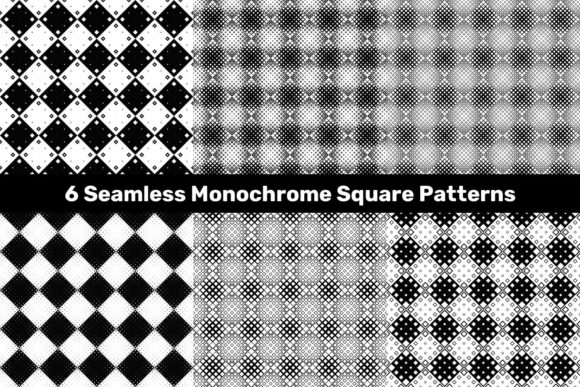
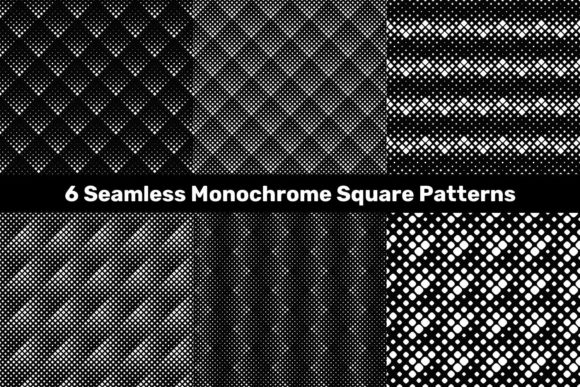
If you have ever spent hours hunting for the right background texture or repeating motif, you already know how much a solid pattern set can change your workflow. The 6 Monochrome Seamless Square Patterns package gives you exactly that kind of relief. It includes six distinct designs, each delivered as a high-resolution JPG (5000x5000 pixels), plus vector files in EPS and AI formats. That means you get flexibility, scalability, and immediate usability no matter what kind of project you are working on. Let's walk through where these patterns actually shine and how different people put them to work.
Why monochrome patterns fit almost any context
Monochrome does not mean boring. It means versatile. When you strip color away, you are left with shape, contrast, and rhythm. The six patterns in this set each bring something different to the table. Some lean geometric with clean lines. Others feel softer with organic curves. But all of them share that neutral palette that makes them easy to layer over other visuals, combine with brand colors, or use as standalone texture. This is especially helpful when you are designing for multiple mediums and need one asset to work everywhere.
For example, a pattern that looks crisp on a white background can also function as a subtle watermark over photography. Because the files are seamless, you never have to worry about visible edges or awkward repeats. Whether you tile them across a webpage or wrap them around a product label, the continuity holds up.
Branding and identity work
Small business owners and branding specialists often need background textures that communicate personality without overwhelming a logo or message. A monochrome square pattern can serve as a backing for business cards, stationery, or social media headers. Because the patterns are vector-based (EPS and AI), you can scale them down for a tiny icon or up for a trade show banner without losing sharpness. The 5000x5000 JPGs are equally useful for quick mockups or client presentations where you just need to drop in a texture and move on.
One brand designer I know used the most geometric pattern from this set as a subtle backdrop for an architecture firm's website. The pattern echoed the clean lines of the firm's portfolio without distracting from the projects themselves. That is the kind of quiet support these designs offer.
Packaging and product labeling
For anyone in product design or small-batch manufacturing, finding patterns that print cleanly is a constant challenge. Monochrome patterns are forgiving because they do not rely on color accuracy. You can print them on kraft paper, matte white stock, or even fabric labels, and they will look intentional every time. The vector formats let you adjust the repeat size so the pattern fits perfectly on a small cosmetic jar or a larger box.
I have seen these patterns used on candle labels, soap wrappers, and even tea tin packaging. The monochrome look gives products a modern, minimalist feel that appeals to customers who value simplicity. And because the package includes six distinct designs, you can mix and match across product lines without repeating yourself.
Digital backgrounds for content creators
YouTubers, podcasters, and social media managers are always looking for clean backgrounds that do not compete with on-screen text or faces. A seamless monochrome square pattern can become the backdrop for video intros, Instagram story templates, or even website hero sections. The high-resolution JPGs load quickly and tile perfectly in web tools, while the vector files give developers the freedom to animate elements or adjust opacity for layering.
A content creator I follow uses the softest pattern from this set as a recurring visual element in her weekly newsletter. She applies it as a subtle background behind quote blocks and call-to-action sections. It creates consistency across issues without feeling repetitive because the pattern itself has enough movement to keep the eye engaged.
Interior and surface design mockups
Interior designers and decorators often use patterns to visualize how textiles, wallpapers, or tile layouts might look in a space. With vector files, you can stretch and repeat a pattern to match room dimensions or apply it to 3D models. The monochrome aspect is especially useful here because it lets you focus on scale and rhythm before introducing color.
I have watched designers take the most geometric square pattern and use it as a stand-in for floor tile layouts. They adjust the repeat size in AI to match real tile dimensions, then present the mockup to clients. By keeping it monochrome early in the process, they avoid premature color decisions that can derail a project later.
Print-on-demand and merchandise
Anyone running a print-on-demand store knows that patterns sell. Tote bags, phone cases, notebooks, and mugs all benefit from interesting surface designs. Monochrome patterns have an advantage here because they appeal to a wide audience. They work on dark and light products alike, and they never clash with other colors in a product photo.
One seller I know took the most textured pattern from this set and applied it to a series of spiral notebooks. She kept the pattern at full opacity on the cover and reduced it to 20% opacity on the inside pages. The result was a cohesive product line that looked premium without requiring custom artwork for each item. Because the patterns are seamless, the repeat on the notebook cover looked continuous and professional.
Who benefits most from this package
The 6 Monochrome Seamless Square Patterns package is not just for professional designers. It is equally valuable for hobbyists, small business owners, students, and anyone who makes things. If you run an Etsy shop, you can use these patterns as digital downloads or incorporate them into physical products. If you teach design, you can hand them to students as starting points for projects. If you manage a brand, you can keep them in your asset library for those last-minute requests that always seem to come at 5 PM on a Friday.
The vector formats (AI and EPS) are particularly useful for teams because they allow edits. You can change stroke weights, rotate elements, or combine patterns. The JPGs give you instant gratification when you just need a texture now. That dual availability means the same asset works for quick mockups and final production files.
Considerations before you start using them
While these patterns are versatile, a few things are worth keeping in mind. First, monochrome means no color variation. If your project relies on vibrant hues or gradient effects, you will need to layer these patterns over colored backgrounds or use them as masks. That is not a limitation so much as a design choice, but it is worth planning for.
Second, seamless patterns tile by repeating the exact same square. If you want a non-repeating or irregular texture, you will need to modify the vector file or combine multiple patterns. That said, the six patterns here give you enough variety to create your own composites.
Also consider file size. The 5000x5000 JPGs are large, which is great for printing but can slow down web loading if used directly. For digital use, you will likely want to resize or compress them. The vector files, meanwhile, are lightweight and infinite in resolution, so they are often the better choice for web and screen work.
Strengths and honest limitations
What makes this package strong is the combination of formats and the seamless nature of the designs. You are not getting six random patterns; you are getting six coordinated assets that work together or separately. The high resolution and vector options mean you are covered for almost any output size.
The main limitation is the monochrome constraint. If you need patterns with multiple colors, gradients, or photographic elements, this is not that package. But if you need reliable, scalable, and immediately usable patterns that fit a minimalist or modern aesthetic, this set delivers. Another subtle limitation is that square patterns may not suit every layout shape. For rectangular or vertical spaces, you may need to crop or combine tiles, but the seamless repeat makes that easier than with non-seamless alternatives.
Ways to stretch the patterns further
Once you have the patterns, you can extend their usefulness in a few simple ways. Play with scale. A pattern that looks dense at full size might become airy and delicate when reduced. Try rotating the pattern 45 degrees for a diamond effect. Layer two patterns at different opacities for a richer texture. Use the vector files to extract individual elements and rearrange them into your own unique repeats. The package gives you a foundation, not a finished wall.
If you work in a team, keep these patterns in a shared asset library. They will save time when someone needs a quick background for a slide deck, a social post, or a product shot. Over time, you will develop a feel for which pattern fits which context, and the six options will start to feel like six old friends rather than six files.
The 6 Monochrome Seamless Square Patterns package is one of those resources that earns its keep quietly. It does not try to be flashy. It just shows up, works, and makes your day a little easier. Whether you are designing packaging, building a website, creating merchandise, or putting together a presentation, these patterns give you a reliable starting point that you can adapt as needed.