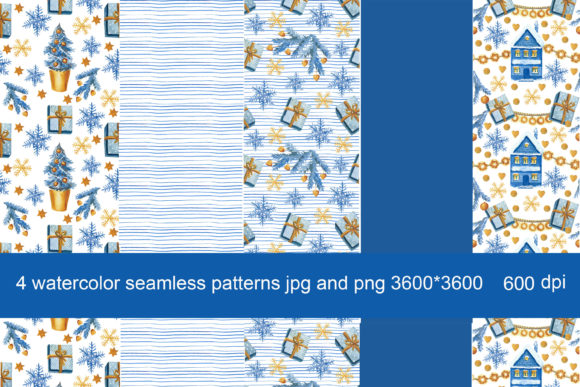
Watercolor Cute Houses Seamless Patterns: A Versatile Choice for Creative Projects
When you're building a brand, planning a celebration, or crafting a personal gift, the visual foundation you choose can set the entire tone. Seamless patterns offer endless repeatability for fabric, paper, and digital designs, but the style of the pattern matters as much as its technical properties. Watercolor Cute Houses Seamless Patterns stand out as a distinct option for anyone seeking a handcrafted, whimsical aesthetic. They combine the charm of watercolor art with the practicality of seamless tiling, making them a resource worth exploring alongside other pattern categories.
This article examines what makes Watercolor Cute Houses Seamless Patterns unique, how they compare to other pattern styles, where they excel, and the tradeoffs you should consider before adding them to your project toolkit.
What Are Watercolor Cute Houses Seamless Patterns?
At their core, these are digital files that contain repeating motifs of small, charming houses rendered in a watercolor style. The "seamless" aspect means the pattern tiles perfectly with no visible edges, so you can scale it across anything from a baby shower invitation to an entire bolt of fabric. Each pattern typically comes in both JPEG and PNG formats at 5000 x 5000 pixels with 300 DPI resolution, delivering crisp prints at various sizes.
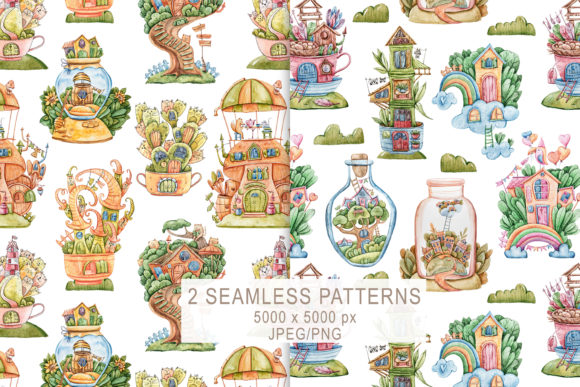
This particular collection includes two distinct seamless patterns. The cute houses element gives the design a storybook quality—soft edges, pastel or muted color washes, and an inviting, handmade feel. Because they are digital files, you can instantly download and use them for birthday invitations, scrapbooking backgrounds, greeting cards, textile patterns for baby clothes, bed linen, mugs, and textile totes. The format allows for personalization: you can adjust colors, layer them, or combine them with other elements if you have basic editing skills.
The watercolor technique itself is what separates these patterns from flat vector illustrations or photographic repeats. Watercolor has inherent variation in opacity and texture, which creates depth and warmth that can make printed items feel more artisanal. For adults aged 20–50 who are likely comparing digital pattern options for small businesses, Etsy shops, or personal projects, understanding this aesthetic difference is key.
How Watercolor Cute Houses Seamless Patterns Compare with Other Pattern Styles
When you research seamless patterns, you'll encounter several broad categories: geometric patterns, botanical repeats, abstract textures, and illustrated themes like animals or houses. Each has its strengths, and the best choice depends on your project's mood and purpose.
Hand-Painted Watercolor vs. Digital Vector Patterns
Vector patterns (often created in Adobe Illustrator or similar tools) are crisp, perfectly uniform, and easy to recolour in seconds. They scale infinitely without losing resolution, and they work well for projects requiring precise corporate branding or modern minimalism. Watercolor Cute Houses Seamless Patterns, by contrast, are raster-based with organic imperfections. The houses may have slight paint bleed or uneven saturation, which gives them personality but also means they don't scale up as cleanly if you need a mural-sized print—though 5000 x 5000 px at 300 DPI is already ample for most home and small-business needs.
If you want a playful, childlike or nostalgic feel, watercolor patterns often outperform vectors. For a baby shower invitation, the soft hues of a watercolor house pattern feel more tender than a sharp vector illustration. On the other hand, if you're designing a technical manual or a minimalist office accessory, vector patterns might serve you better.
Seamless Patterns with Specific Themes vs. Generic Textures
Generic seamless textures like marble, wood grain, or paper are versatile but can lack narrative. A pattern featuring cute houses tells a story immediately—it evokes home, coziness, childhood, or small-town charm. This makes it ideal for themed events, children's products, or lifestyle branding. However, the specificity also limits its use. A geometric hexagon pattern can match both a tech blog and a wedding website, while a house pattern is more likely to fit only certain niches. That's not a drawback if your project aligns with those niches, but it's worth considering if you need a pattern that works across multiple audiences.
Two-Pattern Collections vs. Larger Pattern Libraries
This product offers two seamless patterns. Some providers sell sets with twenty patterns, giving you more variety for a single purchase. Two patterns can be a tradeoff: they are easier to evaluate quickly, and they often cost less, but you might run out of variety for a large project. For a single birthday invitation or a small run of baby clothes, two patterns may be plenty. For a full home decor line, you might need a larger collection or multiple complementary sets. Balancing cost, convenience, and creative freedom is part of the evaluation process.
Strengths
- Artistic uniqueness: The watercolor texture means no two printed items look exactly alike in terms of ink absorption on fabric or paper, which adds perceived value.
- High resolution and file quality: 5000 x 5000 px at 300 DPI supports professional printing on items like mugs and bed linen without pixelation.
- Dual format (JPEG and PNG): PNG with transparency allows layering in design software, while JPEG offers smaller file sizes for quick use.
- Immediate digital download: No shipping delays, ideal for last-minute projects.
- Versatile physical applications: From paper goods (invitations, scrapbooking) to textiles (baby clothes, totes, linens), the patterns hold up across materials when printed correctly.
Tradeoffs
- Fixed aesthetic: You cannot easily change the color palette without image editing software and some skill. If the pastel tones clash with your brand colors, you may need to invest time in editing or choose a different pattern.
- Limited to two designs: For projects covering multiple products (e.g., a whole bedding line with different pattern scales), you may need to purchase additional pattern sets.
- Raster vs. vector: While 300 DPI is excellent, scaling beyond 5000 px width could soften detail. Vector patterns avoid this issue entirely.
- Not ideal for highly formal or corporate contexts: The cute house motif suits casual, family-oriented, or whimsical uses, not serious business environments.
Best-Fit Situations: When to Choose Watercolor Cute Houses Seamless Patterns
Consider using these patterns for projects that benefit from a soft, handmade look and a domestic theme.
- Birthday invitations for children's parties: The cute houses set a cheerful scene, especially for "home" or "neighborhood" themes.
- Baby shower decorations: Watercolor pastels on invitations, thank-you cards, and banner backgrounds feel loving and gentle.
- Scrapbooking pages: The seamless repeat lets you cover an entire page as a background, and you can layer photos on top without worry about visible seams.
- Custom baby clothes: Print on onesies or receiving blankets using fabric transfer methods. The watercolor effect stays soft even after washing if done correctly.
- Mugs and totes as gifts: A single pattern printed on a ceramic mug or canvas tote makes a personal present for housewarming or hostess gifts.
- Small series textile products: Fabric for bed linen or totes in limited quantities (small batch for an Etsy shop) can benefit from the charm without needing huge pattern files.
When You Might Need Another Option
While Watercolor Cute Houses Seamless Patterns serve many creative needs, they aren't universal. If your project requires:
- Strict corporate branding – opt for clean vectors or geometric patterns.
- Very large prints (e.g., wallpaper for an entire wall) – a vector format or a much higher resolution raster pattern might be safer.
- A non-residential theme (e.g., animals, space, florals) – look for patterns that match your subject matter.
- Multiple coordinated patterns – consider a bundle with more designs or combine this set with other watercolor patterns from the same artist for consistency.
- Dark or bold color schemes – watercolor house patterns tend toward light, airy palettes. Some may include darker accents, but typically not full dark mode.
If you are unsure, you can always test the pattern on a small scale. Print a single invitation or a small swatch before committing to a large production run.
Decision Factors to Help You Evaluate
When comparing Watercolor Cute Houses Seamless Patterns with other seamless pattern options, ask yourself these questions:
- What is the emotional tone I want? If warmth, nostalgia, and playfulness are central, watercolor houses are strong candidates. If you need sophistication or neutrality, other styles may fit better.
- How will the pattern be printed? On paper, inkjet or laser printing will capture watercolor details beautifully. On fabric, ensure your transfer method does not distort the soft edges. Test with a sample.
- How many items do I need to produce consistently? For a one-time birthday party, two patterns are plenty. For a product line, you may need more variety.
- Do I have editing capabilities? If you can adjust colors or combine with other elements, the PNG format gives you flexibility. If you need ready-to-use files with no changes, JPEG suffices.
- What is my budget? A two-pattern set is typically more affordable than a large library, making it accessible for small projects or trial use.
Practical Comparisons: Realistic Examples
Imagine you are planning a baby shower for a friend who loves home décor and cozy vibes. You could buy a generic polka dot pattern or a floral vector repeat, but a Watercolor Cute Houses Seamless Pattern would communicate "home" directly. You could use one pattern for the invitation and a second (perhaps with smaller or varied houses) for the thank-you tags. The watercolor effect matches typical baby shower softness. The 300 DPI resolution ensures the invitation prints sharply. In this scenario, the product is a near-perfect fit.
Now consider a small business that sells handcrafted crib bedding. They want a line of bed sheets and pillowcases with a consistent theme. One or two patterns might not cover the full range (fitted sheet, flat sheet, pillowcase, bumper). They might need four to six coordinating patterns to offer variety across product sizes. In that case, this set could be a starting point, but they would likely supplement with additional patterns from the same artist or mix with solid watercolor textures.
Finally, think about a graphic designer creating an invitation suite for a real estate open house. While the "cute houses" theme seems related to real estate, the watercolor style may feel too informal. A crisp line drawing or modern architectural pattern would likely be more appropriate. Here, the product would be a poor choice despite the house motif.
Making an Informed Choice
The value of Watercolor Cute Houses Seamless Patterns lies in their specific blend of artistry, usability, and charm. They are not a one-size-fits-all solution, but they serve a well-defined niche. By comparing them to other pattern types—vector repeats, geometric designs, or larger pattern libraries—you can see where they shine and where they fall short. For birthday invitations, baby shower decor, scrapbooking, and small textile projects that celebrate home and warmth, these patterns offer a unique aesthetic that is hard to replicate with purely digital tools. If your project aligns with that niche, they provide a cost-effective, high-quality foundation. If not, you have a clear understanding of what to look for elsewhere.
Ultimately, the best pattern is the one that fits your project’s emotional tone, technical requirements, and practical constraints. By evaluating these factors intentionally, you can confidently choose the right resource for your creative work.