Exploring the Versatility of Elephant Pink Digital Paper Patterns in Modern Creative Projects
When assembling a toolkit for digital design or paper crafting, texture and theme often determine how far a concept can stretch. Elephant Pink Digital Paper Patterns offer a distinctive blend of whimsical motifs and cohesive color palettes that can anchor an entire creative project, from a single birthday invitation to a multi-page scrapbook album. With sixteen individual digital backgrounds featuring repeating elephant motifs, paw prints, and other coordinated elements, this collection provides both visual consistency and enough variation to keep compositions dynamic. Understanding how to select, combine, and apply these patterns effectively opens up possibilities that go far beyond the obvious party décor use case.
What Defines the Elephant Pink Digital Paper Set
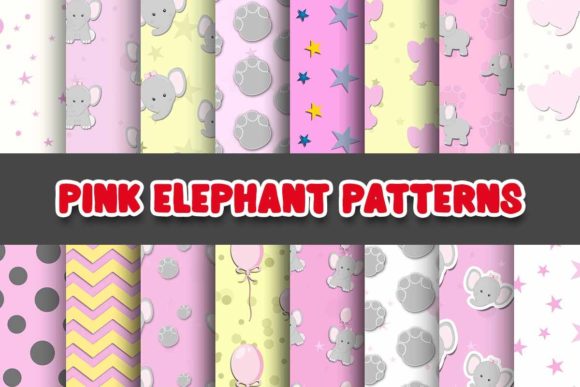
At its core, this collection contains sixteen digital papers, each rendered with a repeating pattern built around elephant-related imagery. The color direction centers on pink tones, though the range typically includes complementary shades that prevent the set from feeling one-dimensional. Some papers feature full elephant silhouettes arranged in a gentle scatter, while others use smaller accent motifs such as elephant paws, stars, dots, or geometric frames that echo the trunk-and-tusk shape in a more abstract way. The variety in scale and density matters: a dense all-over elephant print reads differently than a sparse, airy pattern of paws and tiny footprints, and having both extremes within a single collection means a designer can layer or contrast them without crossing into visual noise.
Digital paper patterns of this type are delivered as high-resolution image files—commonly JPEG or PNG—that can be imported into virtually any design software, printed at home, or sent to a professional printer. The pink palette, when paired with elephant motifs, strikes a balance between playful and elegant. It avoids the overly cartoonish feel of primary colors while retaining enough charm to appeal to children and adults alike. For educators and hobbyists who work with young audiences, these patterns can serve as a non-intimidating entry point into design because the motifs are recognizable and the color harmony reduces the guesswork involved in coordinating elements.
Pattern Density and Visual Weight
One practical consideration when working with any patterned digital paper is how the density of the motif affects readability. A paper with large, closely spaced elephants will dominate a composition; it works best as a background that is partially obscured by other elements or as an accent panel rather than a full-page backdrop for text. Conversely, a paper with small paw prints or a subtle tone-on-tone pattern can support headings, journaling, or layered photographs without competing for attention. The Elephant Pink Digital Paper Patterns collection typically spans these density extremes, giving the user deliberate control over visual hierarchy. When planning a layout, it helps to sort the sixteen papers by visual weight—light, medium, heavy—and then assign them to roles: background, matting, accents, or cut-out elements.
Workflow Integration for Digital and Physical Projects
Creative professionals and hobbyists approach digital paper from different angles, but the underlying workflow shares common steps. After downloading the set, the first task is to open each file in a photo editor or design application to assess the true color and resolution. Monitor calibration varies, and a pink that looks soft on one screen may appear saturated on another. Taking a few minutes to adjust brightness or to sample the dominant pink and use it as a color picker for fonts and embellishments creates a cohesive look across the entire project. This step is especially relevant for business owners producing branded materials, where color consistency across digital and print formats matters.
For scrapbooking, the process often begins with selecting two or three patterns that contrast in scale. A large elephant print might serve as the base page, while a smaller paw-print pattern is cut into photo mats or tags. A third paper, perhaps a solid pink or a subtle stripe from the set, can be used for journaling cards or borders. The sixteen-paper count means there is room to experiment with combinations without running out of options halfway through an album. Because the patterns share a common color family, mixing them rarely produces a jarring result, which is a significant advantage for newer crafters who may lack confidence in color theory.
Digital Invitations and Event Branding
Birthday invitations are one of the most natural applications for these papers, but the approach can go beyond a simple folded card. An event brand built around the Elephant Pink Digital Paper Patterns might include a main invitation, a coordinating RSVP card, a digital save-the-date graphic for social media, and even a banner or cupcake topper template that uses the same motifs. Because the papers are digital, resizing and recoloring elements within the design software is straightforward. Paw prints can become directional arrows guiding the eye to event details; elephant silhouettes can frame a photo of the guest of honor. For educators hosting a classroom celebration, printing these patterns on sticker paper creates instant labels for goodie bags or name tags, extending the theme without requiring additional design work.
Scrapbooking Layouts with Narrative Flow
In scrapbooking, a two-page spread often benefits from a unified background paper that ties both sides together, while the facing pages can use different patterns for variety. The sixteen-paper collection supports this kind of narrative flow. Suppose a spread documents a trip to the zoo or a wildlife-themed party. The left page could use a paper with scattered elephants in a soft pink, suggesting movement and exploration, while the right page uses a paw-print pattern that evokes a trail or path. Journaling blocks can be printed on the lightest paper from the set, ensuring readability. Photographs of children interacting with elephants or animal-themed decorations will find a natural visual echo in the repeating motifs, making the layout feel intentional rather than arbitrary.
Considerations for Print and Digital Output
Whether printing at home or through a service, resolution is the primary technical concern. Digital papers are typically offered at 300 DPI, which yields crisp results at standard sizes up to 12x12 inches. Users should verify that the files they receive match this specification. When printing on an inkjet printer, selecting a heavier paper stock—such as matte cardstock or photo paper—prevents the ink from bleeding and preserves the fine edges of elephant silhouettes. For laser printers, the same papers work well, though the finish may be slightly glossier depending on the stock. Testing a single sheet before committing to a full print run saves both materials and frustration.
For digital-only applications, such as social media graphics or e-invitations, the patterns can be imported into Canva, Photoshop, Illustrator, or Affinity Designer. The high resolution means they can be scaled down without quality loss; scaling up beyond 100% may introduce pixelation, so it is safer to use the files at their native size or smaller. Some creators resize the patterns to fill custom canvas dimensions by tiling them manually, which works seamlessly because the repeating nature of the designs is built in. This flexibility is one reason why digital paper collections appeal to a broad audience: a single set can serve a printable party banner today and a Zoom background for a virtual storytime session tomorrow.
Adapting Patterns for Different Age Groups and Occasions
While the pink palette naturally suggests use in projects aimed at young children—especially birthdays and baby showers—the elephant motif has wider cultural resonance. Elephants appear in folklore, educational materials, and conservation contexts, so these patterns can be repurposed for classroom decorations, library reading corners, or even fundraising materials for wildlife organizations. Researchers and educators developing visual aids for early childhood programs might use the paw-print pattern to create counting cards or matching games. The key is to treat the pink not as a limiting factor but as a design parameter that can be balanced with neutral or metallic accents. Pairing a pink elephant paper with gray, white, or gold elements shifts the tone from overtly girly to broadly whimsical, making the collection suitable for mixed-age audiences.
Project Planning with Sixteen Coordinating Papers
Having exactly sixteen patterns in a set invites systematic planning. A typical party suite—invitation, envelope liner, thank-you card, banner, cupcake wrapper, favor tag, and signage—might use seven or eight distinct patterns, leaving the remaining half for a scrapbook layout or thank-you notes. This built-in buffer is reassuring for anyone who has run out of coordinating paper mid-project. One approach is to create a mood board that assigns each paper a role: primary background, secondary background, accent, cut-out, and liner. By mapping the sixteen files to these categories, the designer can see at a glance whether the collection has enough variety in scale and color intensity to support the intended project scope.
For business owners who produce small-batch party supplies or custom stationery, the Elephant Pink Digital Paper Patterns can serve as a signature aesthetic across multiple client orders. Because the patterns are not tied to a specific holiday or season, they remain usable year-round. A shop that sells printable party kits might feature this collection as a core offering, then add seasonal embellishments—snowflakes for winter, leaves for fall—without changing the background papers. This modular approach reduces design time and ensures a consistent brand voice. The same principle applies to educators who prepare themed classroom materials: the patterns can be reused for different units by layering subject-specific text or icons over the elephant backgrounds.
Layering and Composition Techniques
One of the underappreciated advantages of a coordinated digital paper set is the ability to layer patterns without clashing. A composition that uses a dense elephant pattern as the base layer, a semi-transparent overlay of a lighter paw print, and a solid pink strip for text creates depth while remaining legible. In design software, adjusting the opacity of the overlay layer softens the second pattern so it reads as texture rather than competing imagery. This technique works particularly well for invitation backgrounds where the text must remain prominent. For scrapbook pages, layering a patterned paper behind a photo with a slight offset—like a mat—draws the eye to the image while still showcasing the motif. The sixteen-paper count gives ample room to test different layering combinations before committing to a final layout.
Storage and Organization of Digital Assets
Managing a collection of sixteen digital files requires minimal effort, but establishing a naming convention early helps avoid confusion, especially when patterns are similar. Descriptive file names—such as "elephant-scatter-light-pink" or "paw-print-tone-on-tone"—make it easy to locate the right paper during a project. Some users create a master folder with subfolders organized by pattern density or intended use. For teams collaborating on a single event, sharing the folder via cloud storage ensures everyone works from the same set. Because the patterns are digital, they can be archived and reused indefinitely, which is an advantage over physical paper that can tear, fade, or go out of stock.
Educators who integrate these patterns into teaching materials often appreciate the longevity of digital assets. A lesson plan that uses the elephant paw print for a counting worksheet can be saved and reused each semester without reprinting the entire set. Similarly, a researcher creating visual stimuli for a study on color recognition or pattern perception can standardize the materials across multiple sessions. The pink palette, being consistent across all sixteen sheets, removes one variable from the experimental design.
Creative Experimentation Beyond Conventional Uses
Once the immediate projects—invitations, scrapbook pages, party décor—are complete, the remaining patterns can fuel more exploratory work. Paper crafting enthusiasts might use the motifs to create gift wrap for small presents, drawer liners for a nursery, or even decoupage elements for furniture. The digital format allows the patterns to be printed on fabric transfer paper, opening up possibilities for custom clothing, tote bags, or pillowcases. A hobbyist could print a selection of the papers on adhesive vinyl and use them to decorate a tablet case or a notebook cover. These extended uses demonstrate why a coordinated collection like Elephant Pink Digital Paper Patterns offers lasting value: the motifs are specific enough to anchor a theme, yet versatile enough to migrate across media and applications.
For designers who teach workshops or create tutorials, these patterns serve as reliable teaching tools. The consistent color palette reduces the variables that beginners need to manage, allowing them to focus on layout, composition, and printing techniques. A workshop participant can choose any two papers from the set and be confident they will coordinate, which builds creative confidence. Over time, working with a single cohesive collection helps develop an eye for pattern mixing, scale contrast, and visual pacing—skills that transfer to any future project, regardless of the theme.
Observations on Audience and Application Breadth
The broad appeal of this collection lies in its ability to meet the expectations of both precision-driven professionals and exploratory hobbyists. A graphic designer might use the patterns as a starting point for a client’s branding package, while a parent planning a first birthday party might simply want a quick, attractive background for a digital invitation. Both users benefit from the same assets, but their workflows differ in complexity and scale. Recognizing this, the collection’s strength is that it does not prescribe a single correct use. Instead, it supplies a range of visual tools that adapt to the user’s skill level and project requirements. The sixteen papers provide enough depth to sustain multiple projects, and the pink elephant theme ensures a memorable, cohesive identity across everything they touch.
When approaching any project with these patterns, the most effective strategy is to start with the most dominant motif and build around it. Let the largest elephant pattern set the tone, then use the smaller, subtler papers to support and embellish. This workflow reduces decision fatigue and produces results that feel curated rather than chaotic. Whether the final output is a printed party decoration or a digital classroom handout, the patterns carry a recognizable charm that resonates with viewers and invites engagement.