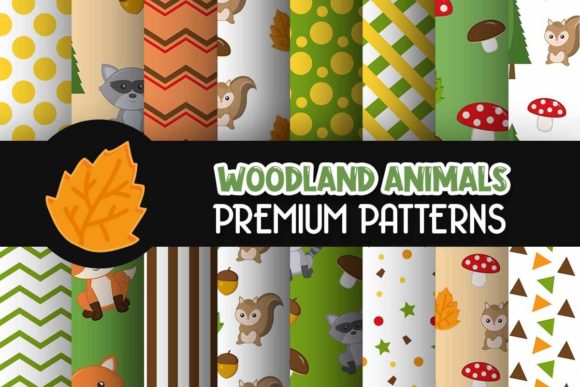
Woodland Animals Digital Papers Patterns
When you work in a space where visual communication, brand identity, or creative output matters, the materials you choose become part of your strategic toolkit. Woodland Animals Digital Papers Patterns offer an unusual combination of versatility and thematic coherence that can support a wide range of professional and personal projects. This collection of 16 premium digital paper backgrounds, each featuring carefully designed Woodland Animals patterns, is not merely decorative. It represents a resource that, when used thoughtfully, can enhance planning, strengthen branding, improve customer experience, and streamline creative workflows. Understanding what these papers are, why they might serve your goals, and how to deploy them intentionally is key to extracting real value from them.
The set itself is straightforward in its composition. You receive 16 distinct digital paper backgrounds, each built around a consistent Woodland Animals motif. The patterns range from subtle to bold, allowing you to select a tone that matches the specific context of your project. Because the designs are digital, they can be resized, recolored, or combined with other elements without loss of quality. This flexibility makes them suitable for anything from a child’s birthday invitation to a sophisticated product launch for a nature-themed brand. The strategic advantage lies not in the papers themselves, but in how you choose to apply them.
Why Woodland Animals Digital Papers Patterns Support Strategic Goals
Every decision you make in a project carries weight. Whether you are an entrepreneur building a brand, a marketer planning a campaign, or an educator designing learning materials, the visual elements you select communicate values and expectations to your audience. Woodland Animals Digital Papers Patterns bring a set of associations that can work in your favor. Woodland imagery evokes feelings of calm, natural simplicity, exploration, and groundedness. These are not neutral. They are emotional cues that can align with goals such as building trust, encouraging creativity, or fostering a sense of community.
If your goal is to position a product or service as approachable, family-friendly, or environmentally conscious, these patterns provide a ready-made visual language. You do not need to start from scratch or hire a designer to create a cohesive look. The collection gives you a foundation that is already thematically unified. This saves time and reduces the cognitive load of making countless small design decisions. For a small business owner or a freelancer juggling multiple roles, that efficiency translates directly into better focus and higher quality output on other aspects of the project.
Beyond branding, these papers can support productivity in your creative processes. When you have a set of coordinated backgrounds, you can move faster from concept to execution. Instead of searching for individual elements and hoping they work together, you begin with a consistent palette and pattern set. This reduces friction in your workflow and allows you to concentrate on message, layout, and user experience. For marketers and creators who produce regular content, this kind of operational efficiency is a real advantage.
Using Woodland Animals Digital Papers Patterns with Intentionality
The most common mistake professionals make with themed design resources is applying them without a clear purpose. A pattern set like this one can feel charming and fun, and it is tempting to use it broadly. But without intentionality, you risk diluting your message or confusing your audience. The key is to ask yourself what outcome you want before you choose a paper.
Start by identifying the core goal of your project. Are you trying to increase engagement at an event? Build recognition for a new product line? Create a calming learning environment for children? Each of these goals suggests a different way to use the Woodland Animals patterns. For a birthday party invitation, you might use a bold, busy pattern that signals celebration. For a classroom worksheet, a subtle, repeating animal track pattern might support focus without distraction. The same set of 16 papers can serve both purposes, but only if you match the pattern intensity to the function.
Another layer of intentionality involves your audience. Adults aged 20 to 50, including entrepreneurs, educators, and decision-makers, often overlook the power of thematic design in professional contexts. They may assume that patterns like these are only for children’s projects. In reality, a carefully chosen woodland pattern can add warmth and personality to a professional presentation, a client proposal, or a workshop handout. The trick is to select patterns that are sophisticated in scale and color. Many of the 16 papers in this collection are designed with subtle textures and muted tones that work well in business contexts. Do not dismiss them as purely playful. Evaluate each pattern on its own merits and consider how it aligns with your brand’s tone.
Practical Applications for Entrepreneurs, Creators, and Educators
The range of possible uses for Woodland Animals Digital Papers Patterns is broader than most people first assume. Here are several practical scenarios where these papers can make a meaningful difference.
- Brand identity and packaging. If you run a small business that sells natural products, children’s goods, or outdoor gear, these patterns can form the backbone of your visual identity. Use one or two consistent patterns across your website, social media graphics, and packaging inserts. This creates a recognizable look that customers associate with your values. The 16 patterns give you enough variety to keep your content fresh while maintaining a cohesive brand.
- Educational materials and worksheets. Educators and homeschool parents can use these papers to create visually engaging learning aids. A pattern with repeating animals can serve as a background for counting exercises, matching games, or writing prompts. The visual interest helps hold a child’s attention without overwhelming the content. For online learning, these backgrounds can be used in slide decks or printable activity sheets, adding a layer of warmth to digital instruction.
- Event planning and invitations. Birthday parties, baby showers, and nature-themed gatherings benefit from coordinated stationery. With 16 different patterns, you can design invitations, thank-you cards, banners, and favor tags that all feel part of the same celebration. This level of coordination is usually expensive or time-consuming to achieve, but a single set of digital papers makes it straightforward.
- Content creation and social media. Bloggers, podcasters, and social media managers need consistent visual themes to build audience recognition. Woodland animal patterns can be used as backgrounds for quote graphics, video thumbnails, or newsletter headers. If your content focuses on nature, parenting, creativity, or sustainable living, these patterns reinforce your topic at a glance.
- Product design for print-on-demand. If you sell products through platforms like Etsy, Amazon, or your own store, these patterns can be used to design notebooks, greeting cards, gift wrap, or fabric. The commercial potential is significant, provided you check the license terms of the specific product you are using. For creators looking to expand their product line without investing in custom illustration, this collection offers a fast path to new offerings.
Strategic Considerations Before You Start
Before you open the files and begin designing, take a few minutes to plan how you will use the collection. This step is often skipped, yet it determines whether the papers become a valuable asset or just another unused download. Here are some questions to guide your approach.
- What is the primary context? Will the papers be viewed primarily on screen or in print? Screen use allows for richer detail, while print may require higher resolution or specific color profiles. Ensure your workflow accounts for the final output medium.
- How will the patterns interact with text and other elements? A busy pattern can make text hard to read. Plan to use patterns as backgrounds with ample contrast, or layer a semi-transparent overlay between the pattern and your text. Test readability early in your process.
- Which patterns best represent your message? Not all 16 patterns will suit every project. Select three to five that align most closely with your brand or event theme. Using too many patterns at once can create visual chaos. Restraint often leads to stronger results.
- Do you have permission to use the patterns commercially? Always verify the license that comes with your purchase. Some collections allow unlimited commercial use, while others restrict certain applications. Knowing this upfront protects you from legal and operational headaches later.
Risks of Using Woodland Animals Digital Papers Patterns Without Clear Goals
Every design tool carries risks when used without intention. The most obvious risk with themed pattern sets is visual inconsistency. If you apply different patterns across your materials without a governing logic, your audience may perceive your brand as scattered or unprofessional. This is especially dangerous for small businesses and freelancers who rely on a polished image to compete with larger players.
Another risk is overuse. When a pattern appears too frequently or in too many contexts, it loses its impact. What was once charming becomes monotone. To avoid this, rotate your patterns based on the specific function they serve. Reserve your most distinctive patterns for high-visibility items like invitations or social media headers. Use simpler, more neutral patterns for internal documents or secondary materials.
There is also the risk of mismatched expectations. If your audience associates woodland animals with children’s content, and you use those patterns in a serious business proposal, you may create confusion. Test your designs with a small sample of your target audience before rolling them out broadly. Their reaction will tell you whether the patterns are supporting your message or undermining it.
Long-Term Value and Positioning
The true value of a resource like Woodland Animals Digital Papers Patterns reveals itself over time. When you build a library of coordinated design assets, you create a foundation that you can return to for multiple projects. The 16 patterns in this collection are not a one-use item. They can be repurposed, recombined, and adapted as your needs evolve. This longevity makes them a smart investment for anyone who regularly produces visual content.
From a positioning standpoint, using a cohesive set of patterns helps you stand out in a crowded marketplace. Many entrepreneurs and creators rely on generic templates or stock photography. By incorporating a distinctive woodland motif, you differentiate your brand in a subtle but memorable way. Customers and clients may not explicitly notice the pattern, but they will feel the consistency and care behind your work. That impression builds trust, and trust is the foundation of long-term relationships.
For educators and trainers, these patterns offer a way to make learning materials more engaging without increasing complexity. Over time, students come to associate the visual style with the learning experience. This can improve retention and participation, especially with younger learners who respond well to thematic environments. The same principle applies to event planning. A consistent visual theme across multiple touchpoints creates a sense of occasion that guests appreciate and remember.
Making Thoughtful Decisions with Woodland Animals Digital Papers Patterns
The decision to use Woodland Animals Digital Papers Patterns should come from an understanding of your specific goals, audience, and context. These papers are not a universal solution. They are a specialized tool that works exceptionally well when applied to the right problem. By approaching them strategically, you avoid the pitfalls of random design choices and instead build a coherent, intentional visual identity.
Start small. Choose one project that would benefit from a warm, nature-inspired aesthetic. Experiment with a few patterns from the set. Pay attention to how the patterns affect the mood and clarity of your work. Gather feedback from colleagues or customers. That feedback will guide your future decisions and help you develop a sense for which patterns work best in which situations.
As you become more comfortable with the collection, expand its use to other areas of your work. The 16 patterns provide enough breadth to cover a variety of needs while maintaining a unified look. Over time, you will develop a mental map of which patterns correspond to which functions. That knowledge becomes a valuable part of your creative workflow, saving you time and improving the quality of your output.
Ultimately, the effectiveness of Woodland Animals Digital Papers Patterns depends on how well you integrate them into your broader strategy. They are not a shortcut to good design, but they are a reliable building block. Used with care, they can strengthen your brand, simplify your processes, and create a more engaging experience for your audience. Whether you are designing a birthday invitation, building a course, or launching a product line, these patterns deserve a thoughtful place in your toolkit.