Spring Flowers Postcards and Patterns Collection
When you work with floral imagery day after day, you learn to spot the difference between a generic flower graphic and something that actually feels alive. The Spring Flowers Postcards and Patterns collection, built around pulsatilla and tulip motifs, sits firmly in the latter category. With 13 files spanning wreaths, postcards, frames, and repeat patterns, this set offers more than just decoration—it gives you a coherent visual language you can adapt across print, digital, and branding projects.
Whether you are a designer hunting for ready-to-use assets, a small business owner refreshing your seasonal marketing, or a hobbyist exploring paper crafts, these files reward close attention. The pulsatilla brings delicate, nodding forms with feathery foliage; the tulip offers clean, upright structure. Together, they create a tension that feels both balanced and intentional.
What the Collection Actually Contains
Before diving into applications, it helps to know exactly what you are working with. The 13 files break down into four functional groups:
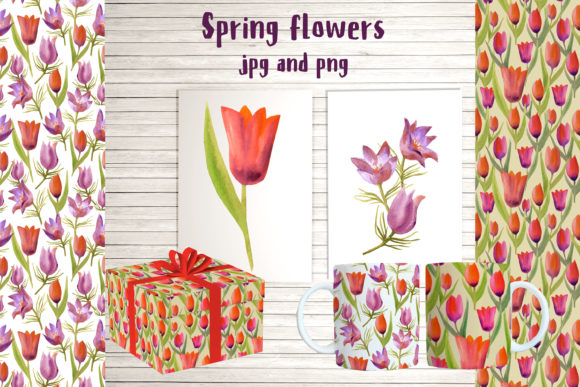
- Wreath: One combined wreath of pulsatilla and tulip flowers in both JPG and PNG, at 3000 x 3000 pixels and 600 dpi.
- Single-flower postcards: Two postcard designs—one featuring the tulip, one featuring pulsatilla—each supplied as JPG and PNG at 105 x 155 mm, 300 dpi.
- Frames: An oval frame (JPG, 2100 x 1500, 600 dpi) plus a rectangular postcard frame (JPG and PNG, 105 x 155 mm, 300 dpi).
- Repeat patterns: Two seamless patterns—one combining tulips and pulsatilla, one featuring tulips alone—both at 3000 x 3000 pixels, 600 dpi, in JPG and PNG.
This structure matters because it gives you both standalone elements and systemic pieces. The wreath and frames work well as anchors; the postcards are ready to print or share; the patterns allow you to scale your output across backgrounds, packaging, or textiles. Having both JPG and PNG for most files means you can layer them in editing software without background interference.
Why Pulsatilla and Tulip Work So Well Together
Pulsatilla, sometimes called pasqueflower, has an understated elegance that avoids the cliché of spring imagery. Its petals are soft, slightly fuzzy, and often purple or mauve. The tulip, by contrast, brings clean lines and bold presence. Pairing them creates a visual conversation between delicacy and structure, between wild meadow and cultivated garden.
For creative professionals, this combination opens up a wider range of moods than a single flower type would. You can lean into the pulsatilla for romantic, ethereal layouts or emphasise the tulip for crisp, modern compositions. The files let you mix and match within a single project without introducing visual conflict.
Practical Applications for Designers and Marketers
If you work in branding or content creation, you likely need seasonal assets that don't scream "generic stock." These postcards and patterns can be adapted in several directed ways:
- Social media templates: Use the postcard PNG files as base layers for Instagram or Pinterest graphics. The 105 x 155 mm proportions translate easily to 4:5 or 1:1 crops with minor adjustments. Drop in your headline and call-to-action over the tulip postcard, and you have a cohesive campaign asset in minutes.
- Email headers and website banners: The wreath file at 3000 x 3000 gives you enough resolution to crop a wide banner while retaining detail. Position text inside the wreath opening for a framing effect that draws the eye to your message.
- Product packaging: The seamless patterns are ideal for wrapping paper, gift tags, or interior box liners. Because both JPG and PNG are supplied, you can test them on different backgrounds without re-editing. A small cosmetics brand could use the tulips-only pattern for a spring limited edition; the combined pattern works well for a botanical-themed subscription box.
Project Ideas for Educators and Hobbyists
Not every user of this collection is a professional designer. Teachers, homeschool parents, and crafters often look for resources that save time while still looking polished. Here is how the files serve those contexts:
- Classroom stationery: The rectangular postcard frame can be printed and used as a template for student writing exercises. Ask children to write a spring poem inside the frame, then display the results. The floral border adds visual interest without distracting from the content.
- DIY greeting cards: Print the postcard files onto cardstock, fold if needed, and add a handwritten message. The pulsatilla postcard works well for thank-you notes; the tulip suit invitations or congratulations. Having both JPG and PNG means you can also edit the text digitally before printing.
- Bullet journal or planner inserts: The oval frame at 2100 x 1500 prints cleanly at smaller sizes. Use it as a decorative cover page for a spring month. The high 600 dpi resolution keeps edges sharp even when you reduce the file significantly.
Adapting for Different Platforms and Formats
The collection's strength lies in its flexibility across media. Here are specific considerations for different output channels:
For Print
All files are supplied at 300 dpi or 600 dpi, which means they are print-ready for home inkjet or professional offset. The postcard files at 105 x 155 mm match standard postcard sizes, so you can print them without cropping. If you plan to use the large wreath file for posters or art prints, the 600 dpi resolution supports enlargement up to A3 or larger without pixelation.
For Web and Digital
When using these files online, you will likely want to compress them for faster loading. The PNG versions preserve transparency, making them ideal for overlaying on coloured backgrounds. The JPG versions offer smaller file sizes for use as full-bleed backgrounds. The patterns tile seamlessly, so you can fill large Web areas without visible seams.
For Branded Collateral
If you are a small business owner, consistency across materials builds trust. Using the tulip pattern as a repeating background on your website and the tulip postcard as a social media graphic creates coherence. Add your brand colours by overlaying semi-transparent shapes in your editing software—the floral details still read through the overlay.
Keeping Your Output Clear and Audience-Friendly
Having high-quality source files is only half the battle. How you use them determines whether the result feels intentional or cluttered. A few practical guidelines help maintain clarity:
- Limit the number of elements per page. The wreath is detailed enough to stand alone as a centrepiece. If you pair it with a pattern, keep the pattern in a muted opacity so it supports rather than competes.
- Consider your audience's expectations. The pulsatilla and tulip aesthetic leans slightly romantic and naturalistic. It suits audiences who respond to botanical authenticity—wedding planners, organic food brands, wellness bloggers. It may feel out of place for tech or industrial brands.
- Test legibility of overlaid text. Both the tulip and pulsatilla postcards have moderate to high contrast. If you place text directly over the flowers, add a semi-transparent background box or choose a bold font in a contrasting colour. The oval frame provides a natural negative space in the centre that is ideal for short headings.
- Use the PNG transparency for layered compositions. The PNG versions of the wreath, postcards, and patterns allow you to stack them in design software. You could place the wreath over the tulips pattern for a rich, textured background with a clear focal point.
Variations and Customisation Approaches
No two creative projects are identical, and the collection supports several directions depending on your goals:
- Monochromatic styling: Desaturate the files or apply a colour overlay in your editing software. This works well if you need the floral shapes but want them to fit a specific brand palette. The high resolution ensures that desaturation preserves tonal variation.
- Collage and compositing: Because you have separate files for tulips, pulsatilla, and combined designs, you can extract individual elements using the PNG transparency. Combine the tulip from one file with the pulsatilla from another to create custom arrangements not present in the original set.
- Mixed media projects: Print the patterns onto tissue paper for decoupage, or use the wreath as a stencil template (invert the colours and print on heavy card). The 600 dpi files hold crisp edges even when transferred to physical materials.
Final Thoughts on Working with This Collection
The Spring Flowers Postcards and Patterns set succeeds because it gives you both finished pieces and building blocks. The postcards are ready to use as-is; the patterns and wreath invite customisation. Whether you are producing a one-off greeting card or a full seasonal rebrand, the 13 files reduce the time you spend sourcing and editing floral assets.
Thank you for visiting the store. The combination of pulsatilla and tulip offers a spring aesthetic that is neither overly sweet nor overly austere—it lands somewhere useful, where you can shape it to your own project needs. Keep the practical applications in mind, let the high resolution and dual file formats do the heavy lifting, and build outward from there.