Floral Seamless Patterns: A Practical Guide for Designers and Creatives
When you are working on a project that calls for repeatable, nature-inspired artwork, floral seamless patterns often become a go-to resource. These designs are built to tile endlessly without visible seams, making them valuable for everything from fabric to packaging. Whether you are a graphic designer, a small business owner, or a hobbyist scrapbooker, understanding what these patterns offer—and how they compare with other design options—can help you choose the right resource for your specific need.
This article takes a balanced look at floral seamless patterns, exploring what makes them distinct, where they shine, and when you might consider alternatives. The goal is to help you evaluate your options with clarity and confidence.
What Makes Floral Seamless Patterns Distinct
At their core, floral seamless patterns are digital illustrations that repeat perfectly across a surface. Unlike a single floral clipart image or a non-repeating background, a seamless pattern is engineered so that the edges align precisely when tiled. This technical feature matters most when you are covering a large area—think wrapping paper, home textile yardage, or a roll of printable stationery.
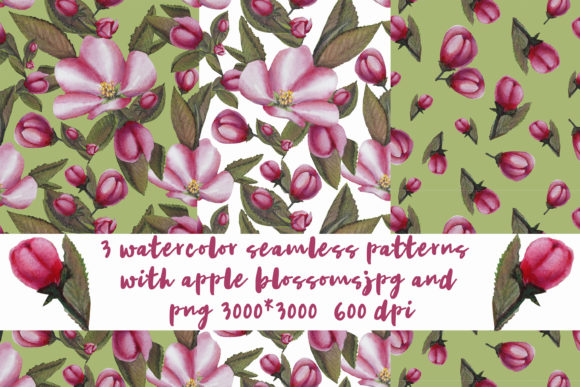
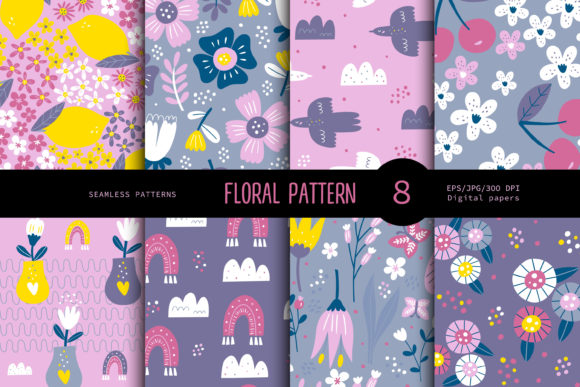
A well-made set, such as one that includes 8 EPS and JPG seamless patterns at 300 DPI, offers a level of resolution that supports both digital and print applications. The 300 DPI ensures sharp output for physical products like postcards, scrapbooking sheets, or fabric prints. The inclusion of both EPS (vector) and JPG (raster) formats gives you flexibility: vector files scale infinitely for large formats, while JPG files are ready for quick previews or direct use in many software programs.
What distinguishes these patterns from generic clipart is the intentional repeat structure. Each pattern is designed from the ground up to flow continuously, hiding the tile edges. That makes them a practical choice when you need consistency across a surface without awkward breaks or mismatched motifs.
Comparing Floral Seamless Patterns with Similar Options
To make an informed decision, it helps to consider how floral seamless patterns stack up against other common design resources. Here are several alternatives and how they differ:
- Individual floral clipart: Single images are ideal for one-off placements—a logo, a greeting card focal point, or a social media graphic. But they do not repeat seamlessly. If you need to fill a background, you would have to manually arrange them, which is time-consuming and often results in visible repetition.
- Custom-designed patterns: Hiring a designer to create a bespoke seamless pattern gives you full control over colors, scale, and motif choices. This is excellent for brand-specific work but typically costs more and takes longer. A pre-made set offers a lower-cost, instant alternative.
- Non-seamless background textures: Many background images are designed for single-use layouts and will show visible seams if tiled. They can work for digital screens where the pattern is not repeated, but for fabric or packaging printing, seamless is usually the better choice.
- Royalty-free photo patterns: Photographic floral patterns can look beautiful but often lose seamlessness at tight tile repeats. They also tend to have higher file sizes and may require more processing to achieve a clean tile.
Each option has its place. The strength of a dedicated floral seamless pattern set lies in its ready-to-use repeatability and format flexibility, saving you the technical work of creating the tile yourself.
Strengths
- Time efficiency: The hardest part—ensuring a perfect repeat—is already done. You can drop the pattern into your project layout and focus on composition and color matching.
- High resolution for print: At 300 DPI, these patterns support professional-quality output on paper, fabric, and packaging. You can print on demand or produce small runs without worrying about pixelation.
- Multi-format availability: EPS files allow you to edit colors, resize without limits, and separate elements in vector software. JPG files offer immediate previews and use in raster-based tools like Photoshop or Canva.
- Versatile application range: From home textiles to wrapping paper, from scrapbooking to product packaging, one set can serve many projects. This cross-use value is especially useful for small businesses that need cohesive visuals across product lines.
Tradeoffs to Consider
- Limited customization: With a pre-made set, the pattern design, color palette, and scale are fixed. If your brand requires a specific color or motif arrangement, you may need to edit the vector EPS or look for a different resource.
- Shared aesthetic: Because these patterns are mass-produced in sets, other designers may purchase the same ones. For exclusive brand identity, a custom design might be preferable.
- File format learning curve: EPS files are not universally editable in all software. You need vector-capable programs (such as Adobe Illustrator, Affinity Designer, or CorelDRAW) to make modifications. Users limited to simpler tools may rely on the JPG versions, which are less flexible.
- Pattern scale and proportion: Some projects require very large or very small repeats. The pre-set scale of a given pattern may not fit every surface perfectly. While vector scaling helps somewhat, the design’s visual balance can shift with extreme resizing.
Best-Fit Situations for Floral Seamless Patterns
These patterns tend to perform best in projects where consistency, speed, and quality are the main priorities. Here are scenarios where they are often the right choice:
- Fabric design for small-scale production: If you are printing a limited run of cotton or poly fabric for bags, quilting, or apparel, a seamless pattern at 300 DPI provides the repeat quality needed for continuous yardage.
- Packaging and wrapping paper: Repeating floral motifs work beautifully on boxes, tissue paper, and gift wrap. The seamless tile ensures that the pattern flows naturally around corners or across a roll.
- Stationery and paper products: Notebook covers, postcards, greeting cards, and printable planners benefit from the high-resolution detail and immediate usability of JPG or EPS files.
- Home textile accents: Throw pillows, table runners, or decorative fabric swatches can use a single tile repeated across the product area, making seamless patterns a practical resource.
- Scrapbooking and planners: Hobbyists often need versatile backgrounds that can be printed at home. The 300 DPI ensures crisp results even on standard inkjet paper.
When Alternatives May Serve You Better
Despite their many strengths, floral seamless patterns are not always the optimal solution. Consider other options when:
- You require a fully unique, brand-exclusive design. If your business identity depends on a signature floral motif that no one else uses, custom design or a commission is the better path.
- The project demands a specific color palette that a pre-made set does not match. While vector editing can often recolor EPS patterns, it requires software skills and time. If you lack that capability, a custom design may be more straightforward.
- You need a very large seamless pattern at a very specific scale. Some applications—like large-format wallpaper or banners—may require pattern elements that are either much larger or much smaller than what the pre-made set offers. Custom creation gives you precise control.
- Your workflow relies entirely on free or low-cost software that does not support EPS editing. In that case, the JPG versions are still usable, but you lose the ability to adjust the pattern. A resource that comes in a wider range of raster-friendly formats might be more convenient.
Key Decision Factors When Evaluating a Floral Seamless Pattern Set
When you compare different sets, a few technical and creative factors can guide your choice:
- Resolution and DPI: For print work, 300 DPI is the standard. Sets that offer lower resolution may work for web use but not for high-quality paper or fabric printing.
- File formats included: EPS (vector) and JPG (raster) are a strong combination. If you also need PNG with transparency, or AI/SVG formats, check the set details.
- Number of patterns in the set: Eight patterns provide variety while keeping a cohesive style. Larger sets offer more choice but may include less usable designs. Smaller sets can be more curated.
- Color palette and style: Consider whether the patterns lean modern, vintage, minimalist, or ornate. Match the aesthetic to your project’s tone.
- Licensing terms: For commercial use, confirm that the license covers your intended application—especially for product manufacturing or digital resale.
- Ease of editing: If you plan to modify colors or elements, vector formats are essential. Check whether the EPS files are well-organized in layers.
Practical Comparison Example
Imagine you are designing a line of floral-themed gift wrapping paper and a matching set of greeting cards. You could approach this in two ways:
Using a pre-made floral seamless pattern set: You choose a set of 8 patterns at 300 DPI. For the wrapping paper, you use one pattern in a full-page repeat, scaling the EPS to fit the roll width. For the card set, you select a different pattern from the same set, ensuring visual consistency across the product line. The whole layout takes a few hours because the repeat work is already done.
Creating a custom pattern: You sketch a floral motif, scan and vectorize it, and manually adjust the tile edges in your design software. This process requires pattern-making knowledge and can take several days. The result is unique, but the time and cost are higher.
Both approaches are valid. The choice depends on your timeline, budget, and need for exclusivity. A pre-made set offers a practical middle ground for many small businesses and creatives who want professional results without extensive technical work.
Making an Informed Choice
Floral seamless patterns are a versatile resource that can save time, provide consistent repeat quality, and support a wide range of product applications. They are particularly valuable for projects where high-resolution print output and immediate usability are key. Sets that offer multiple formats like EPS and JPG, along with 300 DPI resolution, give you the flexibility to work across different software and output types.
At the same time, no single resource fits every situation. If your project demands a bespoke aesthetic, a specific color match, or complete design exclusivity, custom creation or alternative clipart may be more appropriate. The best decision comes from weighing your priorities—speed, uniqueness, cost, and technical capability—against what a given pattern set offers.
By understanding both the strengths and the tradeoffs, you can choose a floral seamless pattern resource that aligns with your creative goals and production needs. Whether you are designing fabric, packaging, stationery, or home textiles, the right pattern can elevate your work while keeping the process manageable and efficient.