6 Seamless Gradient Mosaic Patterns for Modern Design Projects
Pattern libraries are often hit or miss. Some offer superficial variation with little practical range, while others deliver genuine utility across multiple applications. The 6 Seamless Gradient Mosaic Patterns package sits firmly in the latter category, providing a focused collection that balances visual complexity with production-ready versatility. For designers, marketers, and content creators who work across print and digital media, understanding what this set offers—and where it may fall short—is essential for deciding whether it belongs in your asset library.
This article evaluates the package across several dimensions: its core characteristics, real-world performance, target audience fit, and long-term value. The goal is to give you a clear, balanced picture so you can make an informed decision based on your specific workflow and project needs.
What the Package Delivers: Format and Scope
The 6 Seamless Gradient Mosaic Patterns package includes six distinct patterns, each provided in three formats: high-resolution JPG (5000x5000 pixels), vector EPS, and vector AI. This combination addresses a common pain point for designers: the need for both raster and vector versions of the same asset. The JPG files are suitable for immediate use in photo-based projects or web graphics, while the EPS and AI files allow for scaling, recoloring, and customization without loss of quality.
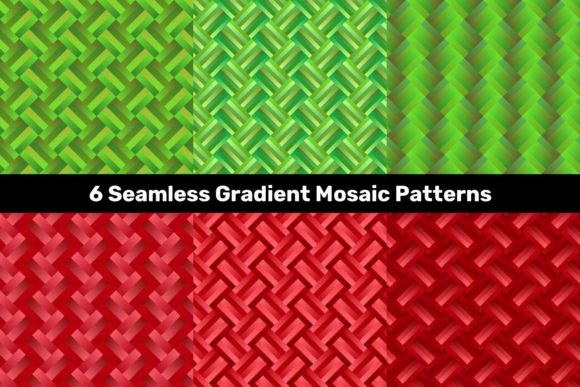
Each pattern follows a gradient mosaic aesthetic—think fragmented geometric forms with smooth color transitions. The seamless nature of the patterns means they tile infinitely without visible seams, making them ideal for backgrounds, textiles, packaging, and digital surfaces. The resolution of the JPG files is generous; 5000x5000 pixels at 300 DPI translates to roughly 16.7 by 16.7 inches in print, giving you ample room for large-format applications.
Format Compatibility and Workflow Integration
For designers working in Adobe Creative Suite, the AI and EPS files integrate directly into Illustrator and other vector-compatible tools. The EPS format also opens in many alternative vector editors, which broadens access for users who rely on software like Affinity Designer, CorelDRAW, or Inkscape. The JPG files are universally readable, though they lack the transparency or layering capabilities of PNG or TIFF. If you need a transparent background, you will need to work from the vector files and export accordingly.
The decision to include both raster and vector formats reflects a practical understanding of how design assets are actually used. A pattern destined for a website header may work fine as a JPG, but the same pattern scaled for a trade show banner requires vector resolution. Having both options in one package eliminates the need to source or recreate files, which saves time and reduces inconsistency across deliverables.
Visual Characteristics and Design Strengths
The gradient mosaic style combines two techniques that are individually popular and collectively powerful. The mosaic element introduces structure and repetition, while the gradient overlay smooths transitions and adds depth. The result is a pattern that feels both organized and fluid. Unlike purely geometric patterns that can appear rigid, or purely gradient patterns that may lack texture, the mosaic approach offers a middle ground that reads well at multiple scales.
Each of the six patterns in this set takes a different color direction. Based on the typical range found in such collections, you can expect variations that include cool blues and teals, warm oranges and pinks, neutral earth tones, and high-contrast combinations. This range allows for use across different brand palettes without requiring extensive recoloring. That said, if your project demands a very specific color scheme, you will likely need to adjust the vector files—a straightforward process for experienced users but potentially time-consuming for beginners.
Seamless Tiling in Practice
The seamless quality of these patterns is one of their strongest attributes. Poorly designed patterns reveal obvious repetition points, which breaks immersion and looks unprofessional. The 6 Seamless Gradient Mosaic Patterns are constructed to avoid this issue, with tile boundaries that flow naturally. This makes them suitable for wallpaper, fabric printing, website backgrounds, and any application where the pattern must repeat without drawing attention to itself.
Testing the tiling at different scales is advisable. A pattern that tiles perfectly at one size may show irregularities when scaled up or down. Because the vector files are editable, you have the flexibility to adjust tile size or reposition elements if needed.
Real-World Performance and Use Cases
In practical terms, the value of this package depends heavily on how you intend to use it. For a graphic designer working on a brand identity, the patterns can serve as secondary visual elements for packaging, stationery, or digital collateral. For a web designer, they offer background options that are more interesting than solid colors or basic gradients, without the distraction of overly complex imagery. For a small business owner creating social media graphics, the JPG files provide a quick way to add visual texture to posts or banners.
One area where these patterns excel is in surface design. The mosaic gradient style translates well to fabric, ceramic tile, and wallpaper, where the combination of geometry and color gradation adds sophistication. If you are a product designer or a creative entrepreneur developing merchandise, the vector files give you the precision needed for manufacturing specifications.
Print vs. Digital Considerations
The 5000x5000 pixel JPG files are well suited for digital use, but their large size may require compression for web deployment. For print, the resolution supports high-quality output up to A2 or larger, depending on your tolerance for viewing distance. The vector files, of course, have no resolution limit and are the better choice for any print application where scale might change.
One limitation to note: the JPG format uses lossy compression, so repeated saving or aggressive compression can introduce artifacts. For archival purposes, keep the original files unchanged and export derived versions as needed. The vector files do not have this issue and can be saved in native AI format or exported to SVG, PDF, or other formats without quality degradation.
Who Benefits Most from This Package
The 6 Seamless Gradient Mosaic Patterns are best suited for professionals who regularly design backgrounds, surfaces, or textiles and who value efficient workflows. Freelancers and small agencies will appreciate the time saved by having ready-to-use, customizable patterns that do not require creating from scratch. Marketers and bloggers can use the JPG files directly for visual content, while educators and publishers can incorporate them into presentations or teaching materials.
For beginners or hobbyists, the package provides a learning opportunity as well. Working with the vector files to understand how seamless patterns are constructed, how gradients interact with geometry, and how to recolor without breaking the design can build foundational skills. However, beginners may find the vector editing process challenging without prior experience in Illustrator or similar software.
Situations Where These Patterns Add the Most Value
- Branding projects that require a secondary pattern element for consistency across touchpoints
- Web design where background textures need to load quickly and tile reliably
- Product packaging that benefits from a subtle, repeating visual motif
- Social media and presentation graphics that need visual depth without complexity
- Print-on-demand merchandise such as phone cases, notebooks, or fabric items
In each of these scenarios, the combination of format variety and design quality reduces friction between concept and execution. You are not forced to compromise between a raster image that scales poorly and a vector file that requires extensive setup.
Quality Assessment and Long-Term Value
Judging the quality of pattern assets involves several criteria: resolution, design coherence, file integrity, and ease of modification. By these measures, the 6 Seamless Gradient Mosaic Patterns package performs well. The resolution of the JPG files is above average for stock pattern sets, and the inclusion of vector formats ensures future-proofing. Design coherence is strong: the six patterns share a consistent aesthetic while offering enough variation to avoid monotony.
File integrity is another positive point. The EPS and AI files, when properly exported, should open without errors across recent versions of major design software. Users on older software versions may encounter compatibility issues with AI files, but EPS is widely supported as a fallback.
Potential Limitations to Consider
No resource is universally perfect, and this package has a few limitations worth acknowledging. The first is the number of patterns: six is a manageable quantity, but it may not provide enough variety for large-scale projects that need dozens of distinct backgrounds. The second is the stylistic specificity. The gradient mosaic look may not suit every brand or project, particularly those that demand minimalist, flat, or highly organic aesthetics.
Additionally, the JPG format lacks transparency. If your project requires a pattern to overlay onto another image or background, you will need to work from the vector files and export with transparency enabled. This is not a flaw in the package itself—it is simply a constraint of the JPG format—but it is worth noting for less experienced users who may expect transparent backgrounds.
Practical Recommendations for Getting the Most Out of These Patterns
To maximize the value of the 6 Seamless Gradient Mosaic Patterns, start by exploring the vector files first. Open each pattern in your vector editor and examine the structure: note how the mosaic pieces are arranged, how the gradient is applied, and how the tile boundaries are constructed. This understanding will help you customize effectively later.
When using the JPG files for digital work, consider scaling them down to reduce file size. A 5000x5000 pixel image is unnecessarily large for most web applications and can slow page load times. Export the pattern at the size you need, and test tiling at that size to confirm seamlessness.
If you plan to use the patterns across a brand identity, create a color palette based on the gradients and apply it consistently. The mosaic style works well as a supporting element in layouts where a solid color or simple shape carries the primary message. Avoid overusing it—let the pattern serve as texture, not as the main focal point.
Finally, keep the vector files in a dedicated asset library. Over time, as your projects accumulate, having a well-organized set of customizable patterns saves significant effort. The 6 Seamless Gradient Mosaic Patterns represent a solid investment for anyone who regularly needs this specific visual style, especially when the ability to modify and scale is a priority.
Whether you are a freelance designer juggling multiple client brands, a small business owner refining your visual identity, or a creative professional exploring new surface design directions, this package offers a practical balance of quality, flexibility, and format readiness. The limitations are clear and manageable, and the strengths align with real-world design demands. If the gradient mosaic aesthetic fits your work, the patterns will serve you well across a wide range of applications.